This was... displeasing.
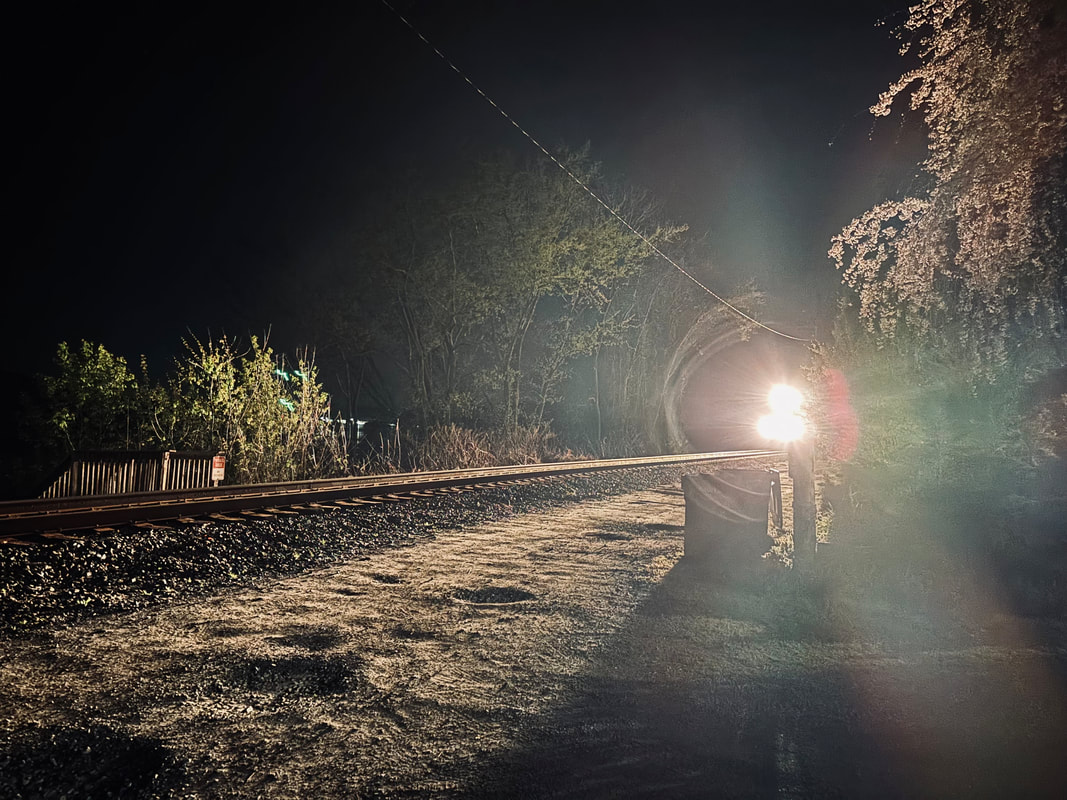
At around 10:00 PM on April 17th, I waited beside a railroad track that winds along the banks of the Susquehanna River in rural Pennsylvania. I had found a nook of open sky between trees and telephone wires, and in the darkness I could barely make out the glow of the Milky Way. I booted up a Dwarf 3 electronically assisted telescope. Readers will know that I’ve tried the EVScope 1 and 2, and then the Vespera 2. The Dwarf 3 is more compact than those telescopes, it’s much cheaper, and it promises comparable performance to the Vespera. I had to try it out.
As I waited, a distant rumbling intruded on my thoughts. It occurred to me that the rumbling might have started some time ago. The ground began to tremble, ever so slightly. And then a shaft of blinding light slashed through the night. I grabbed my telescope, halfway through its exposure, and ran. I made it to the front yard of my cottage, about 15 feet from the tracks, when a freight train thundered by. Car after car after car passed as I stood, gawking. Then it was gone, and darkness returned.
As I waited, a distant rumbling intruded on my thoughts. It occurred to me that the rumbling might have started some time ago. The ground began to tremble, ever so slightly. And then a shaft of blinding light slashed through the night. I grabbed my telescope, halfway through its exposure, and ran. I made it to the front yard of my cottage, about 15 feet from the tracks, when a freight train thundered by. Car after car after car passed as I stood, gawking. Then it was gone, and darkness returned.
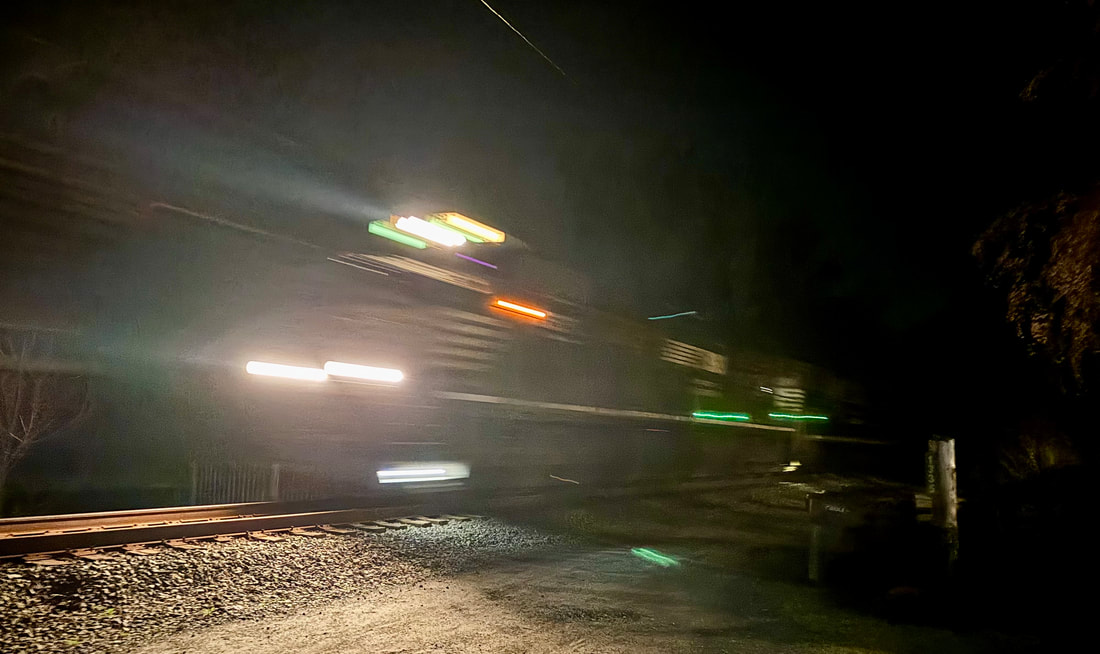
Managed to get these pictures from the yard.
It took me a while to regain the courage I needed to set up the telescope a second time. Since there was still no better place to observe than beside that railroad track, I tried again. I attempted two ten-minute exposures, one of Bode’s Galaxy (M81), the other of the M3 globular cluster. Both were high in the sky. I didn’t dare stay out any longer, and when I packed up, I counted myself lucky to have avoided a second train. These are the images that I acquired at such peril:
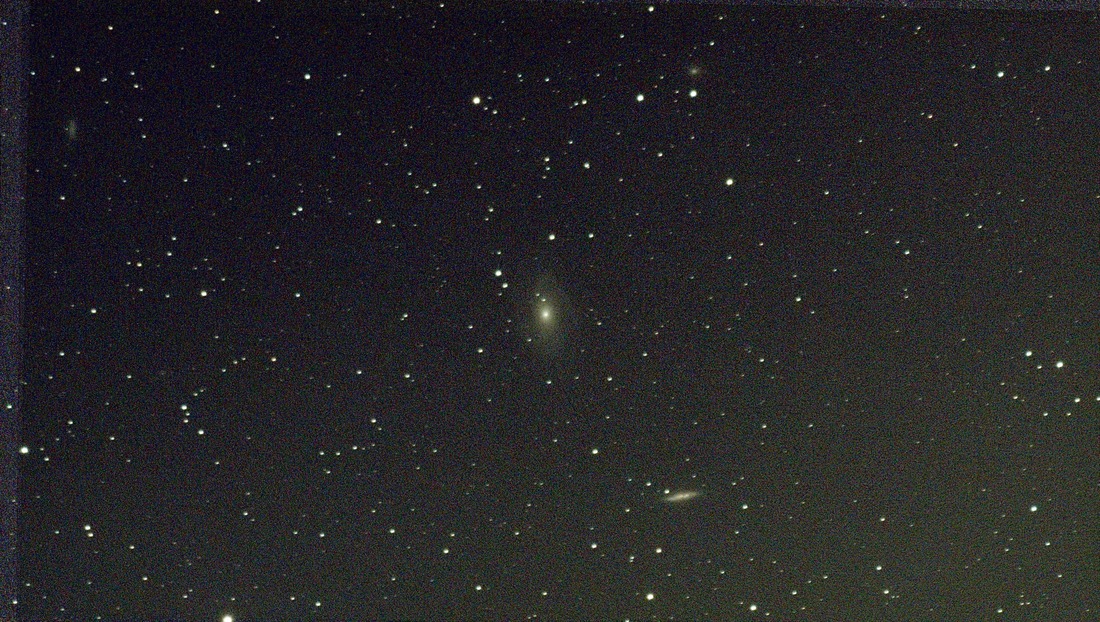
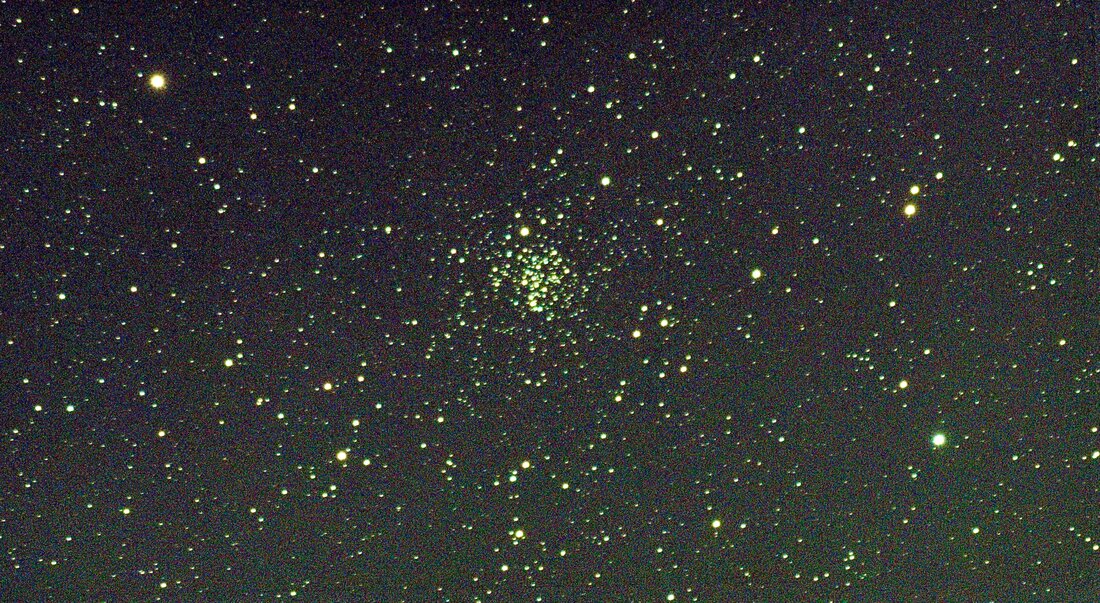
Now, the beauty of the Dwarf is that its images are saved as .TIFF files that can be easily modified and improved through astrophotography software, namely PixInsight. I don’t know how to use that program yet, but I do have some familiarity with Pixelmator Pro, a less powerful tool that I use in my scholarship. De-noising my M3 image and reducing the saturation of its green light gave me the following:
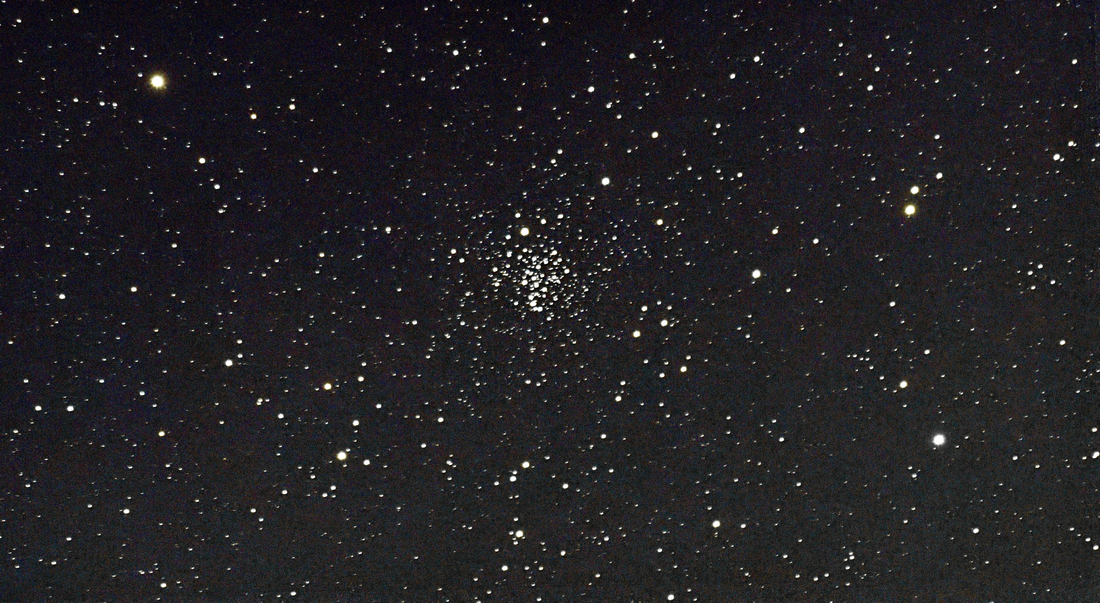
A shot of M3. Impressive only when you consider the size and convenience of the Dwarf.
Okay . . . nothing to write home about. I know for sure that it’s easy to improve some of the problems in this picture, namely the star trailing caused by inadequate tracking. But I also think that the small aperture of the Dwarf 3 – just 25 millimeters! – may add more noise to its images, and no doubt requires longer exposures to bring out subtle details in nebulae or galaxies. I was impressed by the Dwarf’s software, which is incredibly easy to use, but my first experience with the telescope underwhelmed me.
I had sold my Vespera to try the Dwarf 3, and now I can’t say I was very happy about the swap. Fortunately, I found a second-hand Vespera Pro on sale for a fair price. I decided to get that telescope, and sell the Dwarf, admittedly before I had a chance to experiment with that telescope’s full abilities.
I had sold my Vespera to try the Dwarf 3, and now I can’t say I was very happy about the swap. Fortunately, I found a second-hand Vespera Pro on sale for a fair price. I decided to get that telescope, and sell the Dwarf, admittedly before I had a chance to experiment with that telescope’s full abilities.
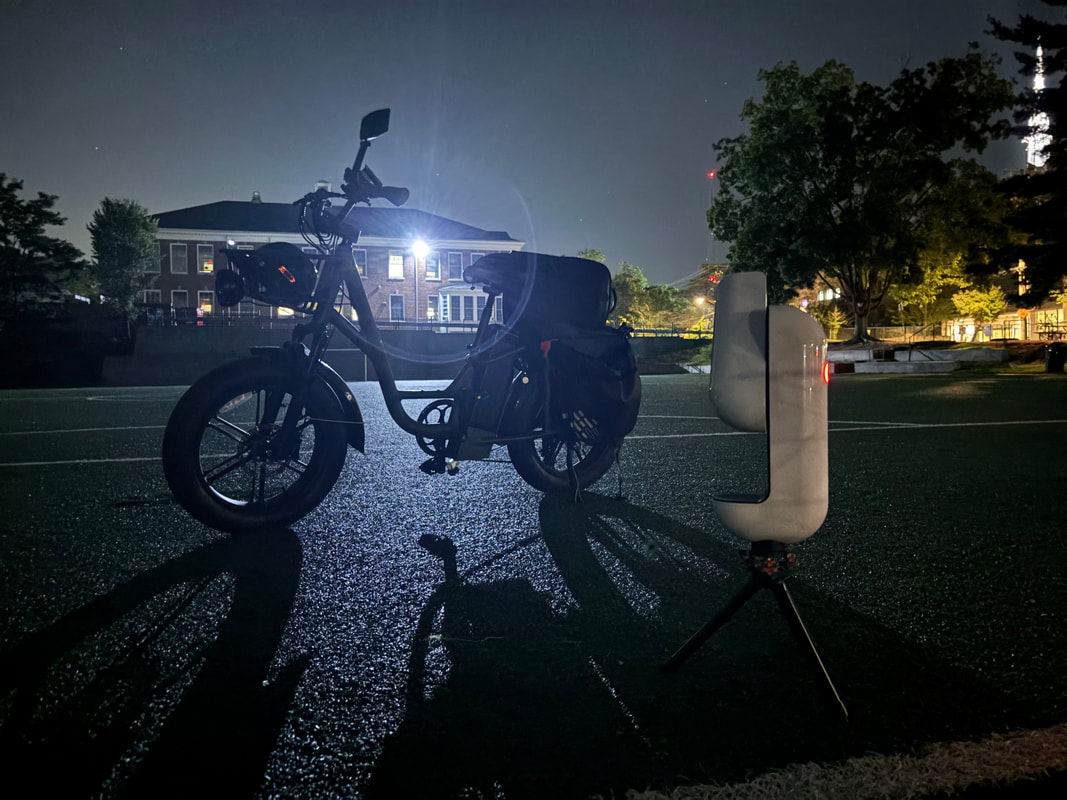
The Vespera is compact enough to pop in an e-bike. Here I am in a local schoolyard.
A few days ago, on June 25th, I stepped out with the Vespera under the considerably more light-polluted skies of downtown Washington, DC. Atmospheric seeing was superb – maybe the best we’ve had this year – but transparency was poor. Aerosols in the atmosphere amplified the light pollution, especially in the southern half of the sky. Nevertheless, I pointed the Vespera at a patch of grey, near the galactic core, and began to observe the Eagle Nebula (M16). Here’s the result of another ten-minute exposure, again denoised with Pixelmator Pro:
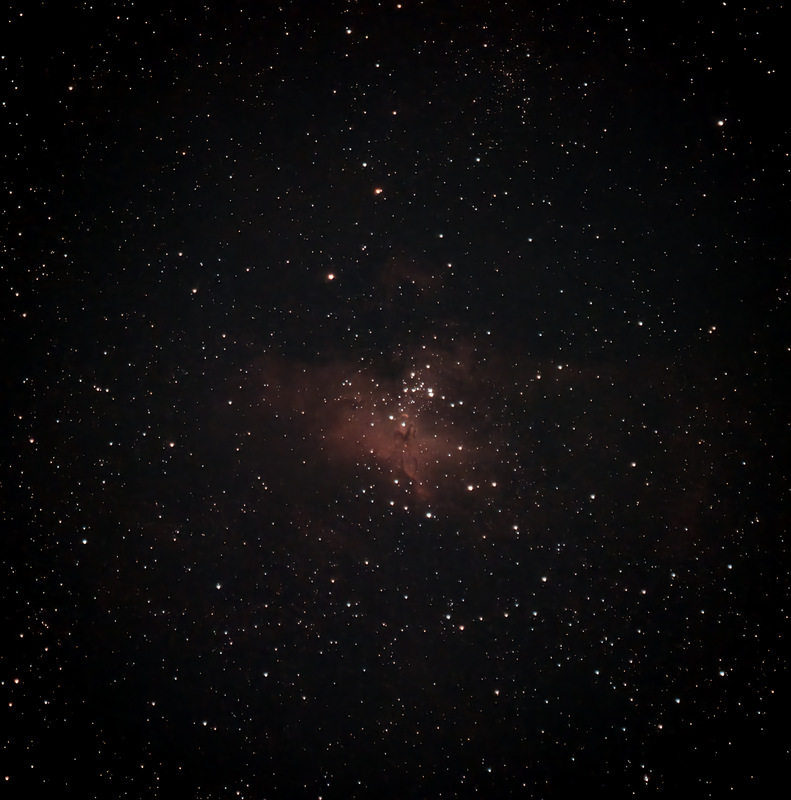
This is probably my finest astrophotography photo with any EAA telescope.
As you can see . . . there’s a difference. The Vespera is bulkier than the Dwarf but much smaller than the EVScope, and on some objects aperture does make a difference. A ten-minute exposure of the Whirlpool Galaxy (M51) in the light-polluted sky, for example, didn’t look quite as good as the images I’d acquired with my EVScope 2:
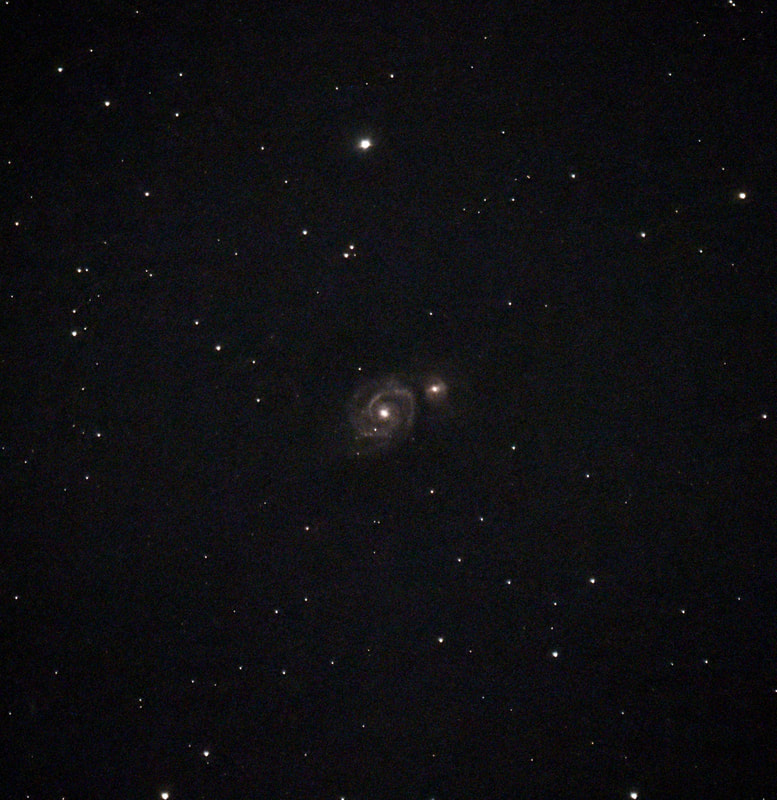
I will say that, again, the night sky was grey with light pollution and aerosols.
And then there’s the setup time. The Dwarf and EVScope are ready to go within a minute or two after setup. The Vespera requires about five minutes. Then again, it tracks stars more effectively than the other telescopes, and it focuses automatically. So, on most objects, I judge the Vespera Pro to be the best electronically assisted telescope on the market – and I’m not sure it’s close.
My plan now is to try the Vespera next month under the truly pitch-black skies of Riding Mountain National Park, Manitoba. With any luck, there won’t be much wildfire smoke in the atmosphere, and I won’t be attacked by a cougar or coyote. We’ll see!
My plan now is to try the Vespera next month under the truly pitch-black skies of Riding Mountain National Park, Manitoba. With any luck, there won’t be much wildfire smoke in the atmosphere, and I won’t be attacked by a cougar or coyote. We’ll see!