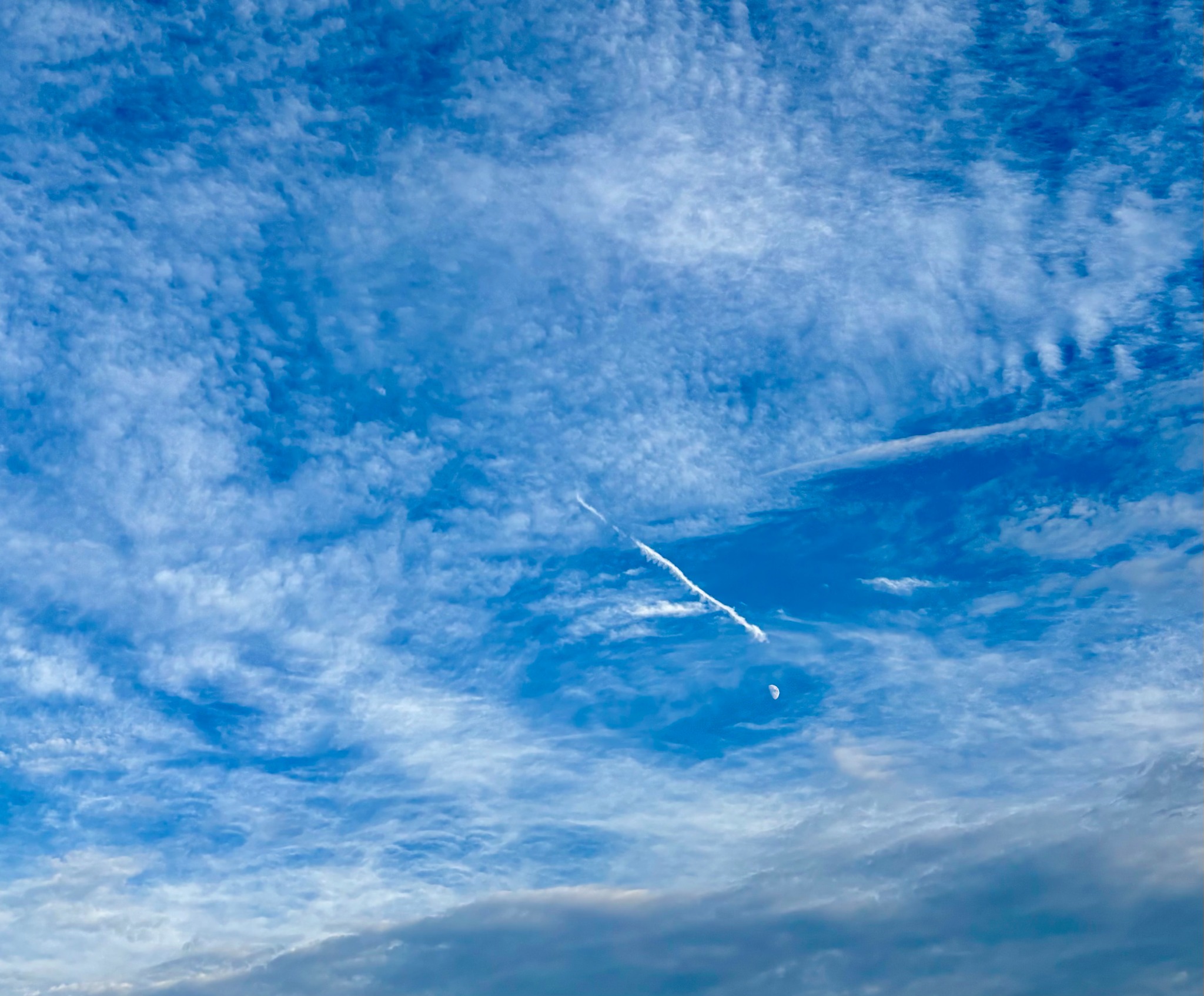
a glorious evening sky near the Atlantic Ocean.
Every year, not long after our trip to Manitoba, and just before classes resume at Georgetown, I take a quick trip to the Atlantic Ocean coast in Delaware.
In Milton – a picturesque little town we’ve stayed in the past two years – the sky is nowhere near as dark as it usually is in Riding Mountain. But it’s a good deal darker than it is in Washington, DC or Winnipeg. Often, it’s dark enough to see the Milky Way, and there’s less risk of wildfire smoke that far south.
This time around, the forecast called for rain. But I’ve often found that forecasts can mislead, and that may be especially true after hundreds of forecasters were fired from the National Weather Service last year.
So, I brought the Seestar.
And on our first evening near the beach, with the rhythm of the ocean waves thrumming in the distance, I set up the little telescope under a beautifully clear sky. It was time to see just what the Seestar could do in Bortle 4 conditions, on a balcony where the night seemed full of stars.
My first target was M51, the whirlpool galaxy. Longtime readers will know that I’ve used every electronically assisted telescope I’ve ever owned to image the big spiral’s collision with its hapless galactic neighbor. The whirlpool galaxy therefore gives me a way to trace the evolution of “smart” telescope technology.
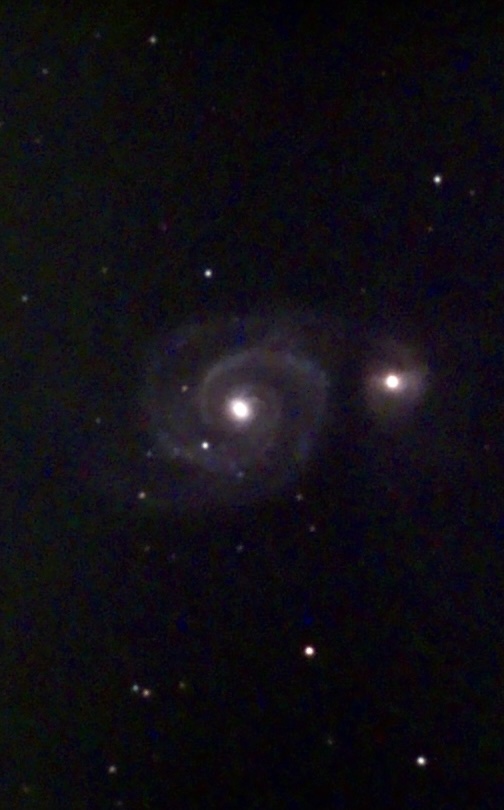
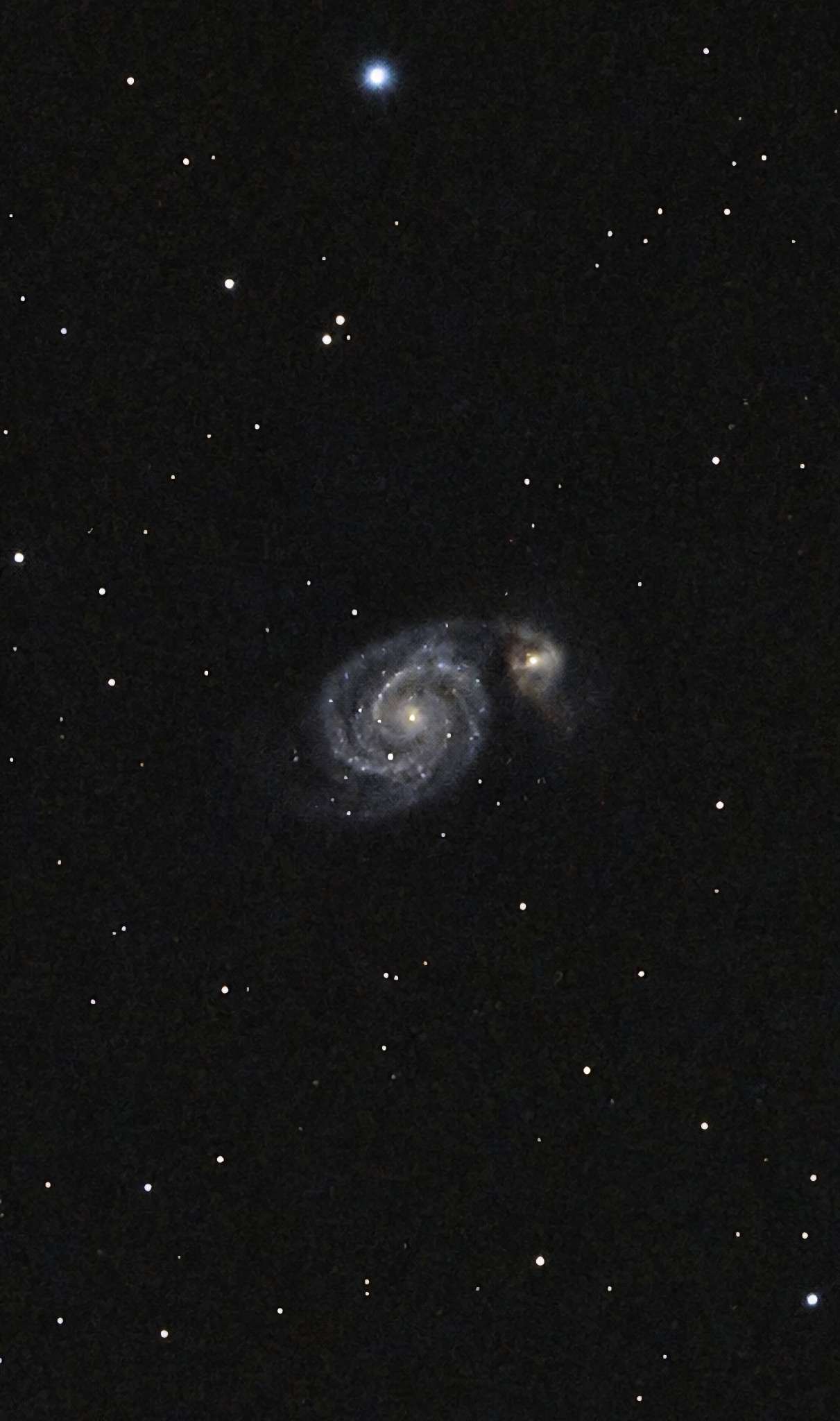
M51, imaged in 2021 with the first generation EVScope (left) and in 2026 with the Seestar S30 Pro (right).
Just have a look at these two images, both roughly 20-minute exposures. I took the shot on the left with my $4500 (shudder) Unistellar EVScope on the night of March 20th, 2021. And the shot on the right is, of course, my beach picture with the $700 Seestar, just a couple nights ago.
Now, admittedly the shot on the left is a processed version of a much more zoomed out image that included a satellite streaking by and some nearby streetlights. And that, too, is an innovation made possible by the newer technology: a much wider frame, and image processing software embedded within the smartphone app.
My next target was the Andromeda Galaxy, then just peeking above a row of nearby houses. Here, too, a comparison is instructive. The top image is a 30-minute exposure of Andromeda, taken with the $4500 EVScope 2 in 2023. The middle image is a 33-minute exposure, taken with the ($3500, if memory serves) Vespera 2 Pro almost exactly one year ago. The bottom is a 22-minute exposure with the Seestar Pro, again, just a few nights ago. All three pictures were taken under the comparatively dark sky in coastal Delaware.
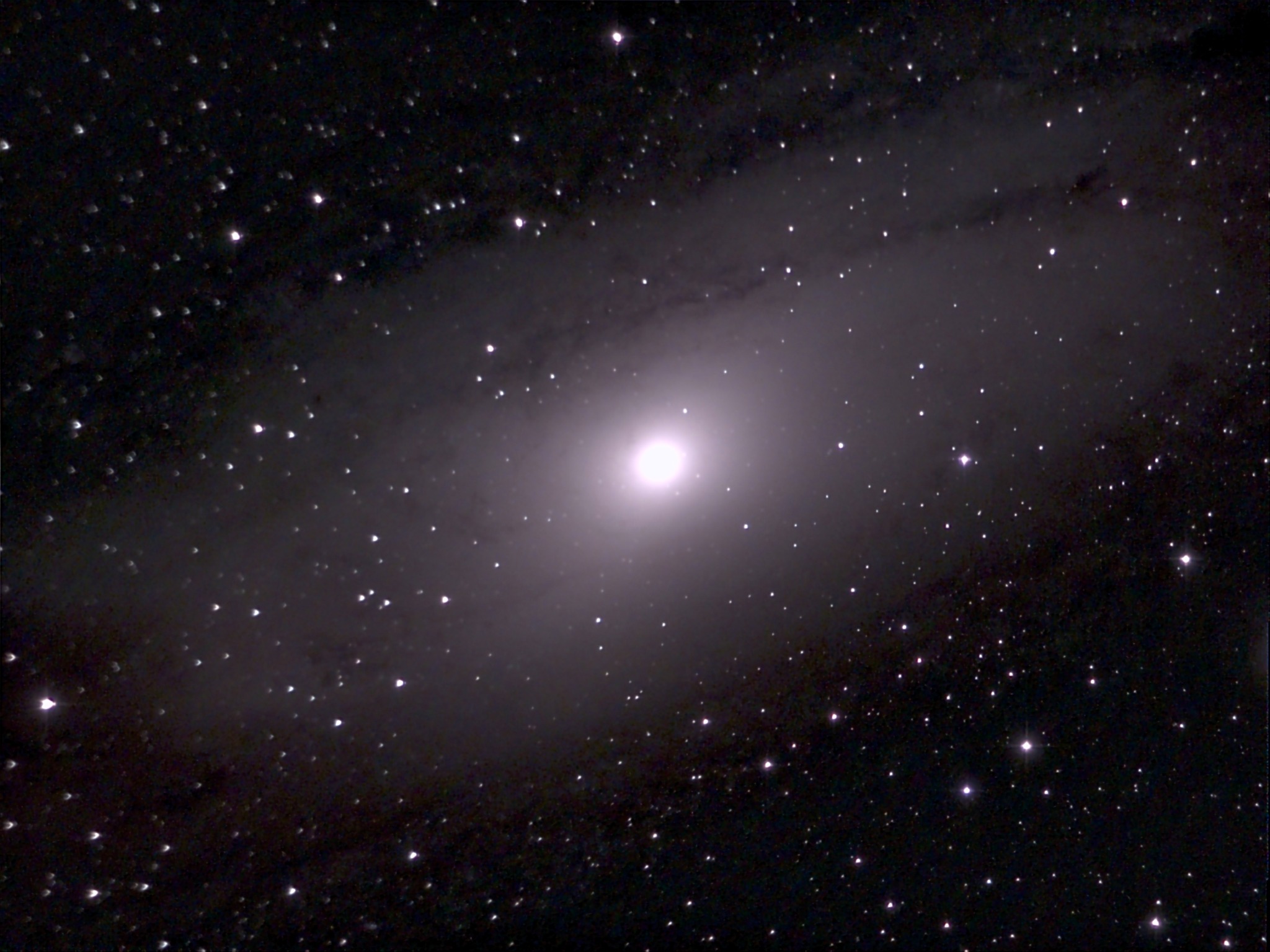
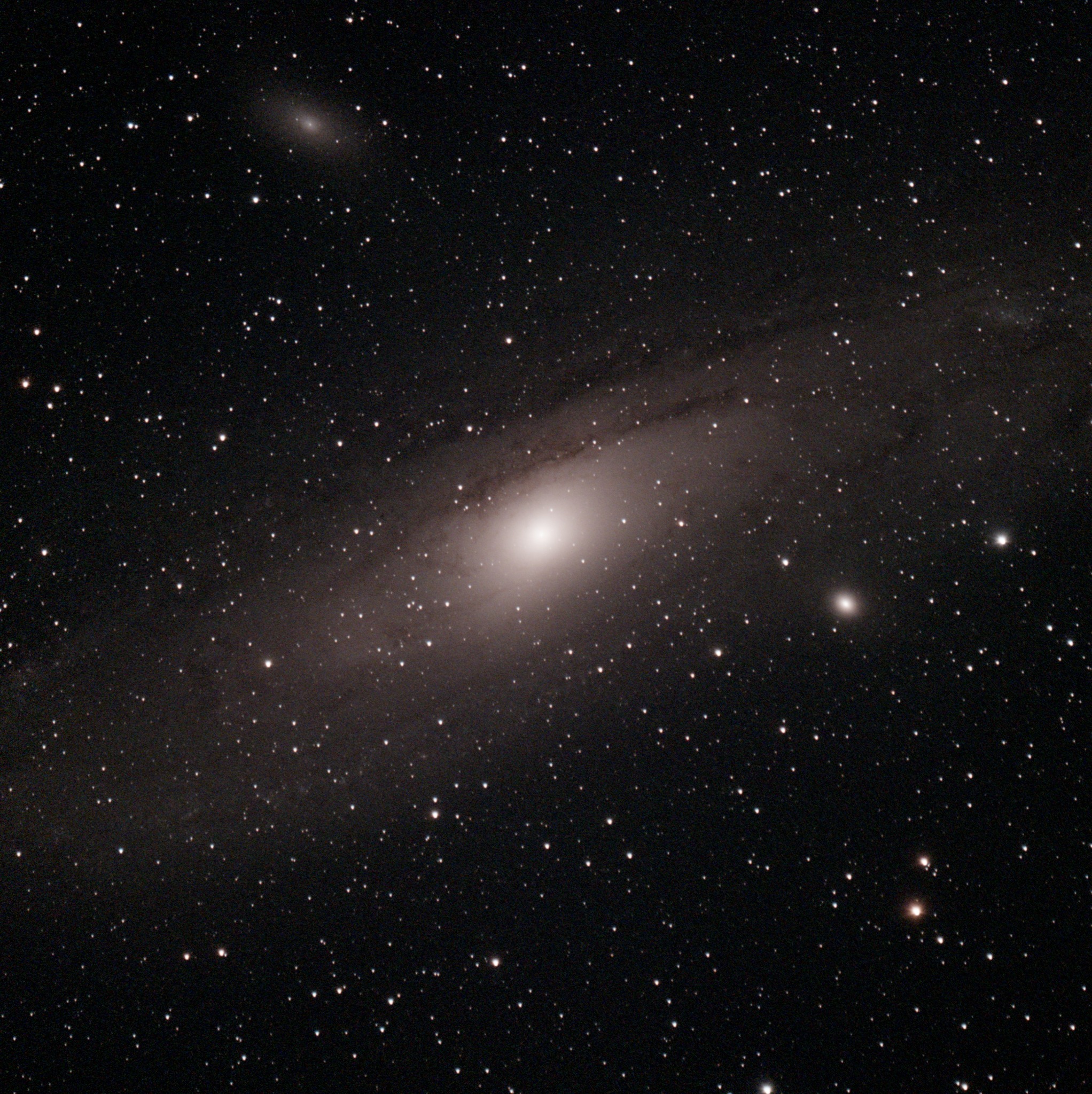
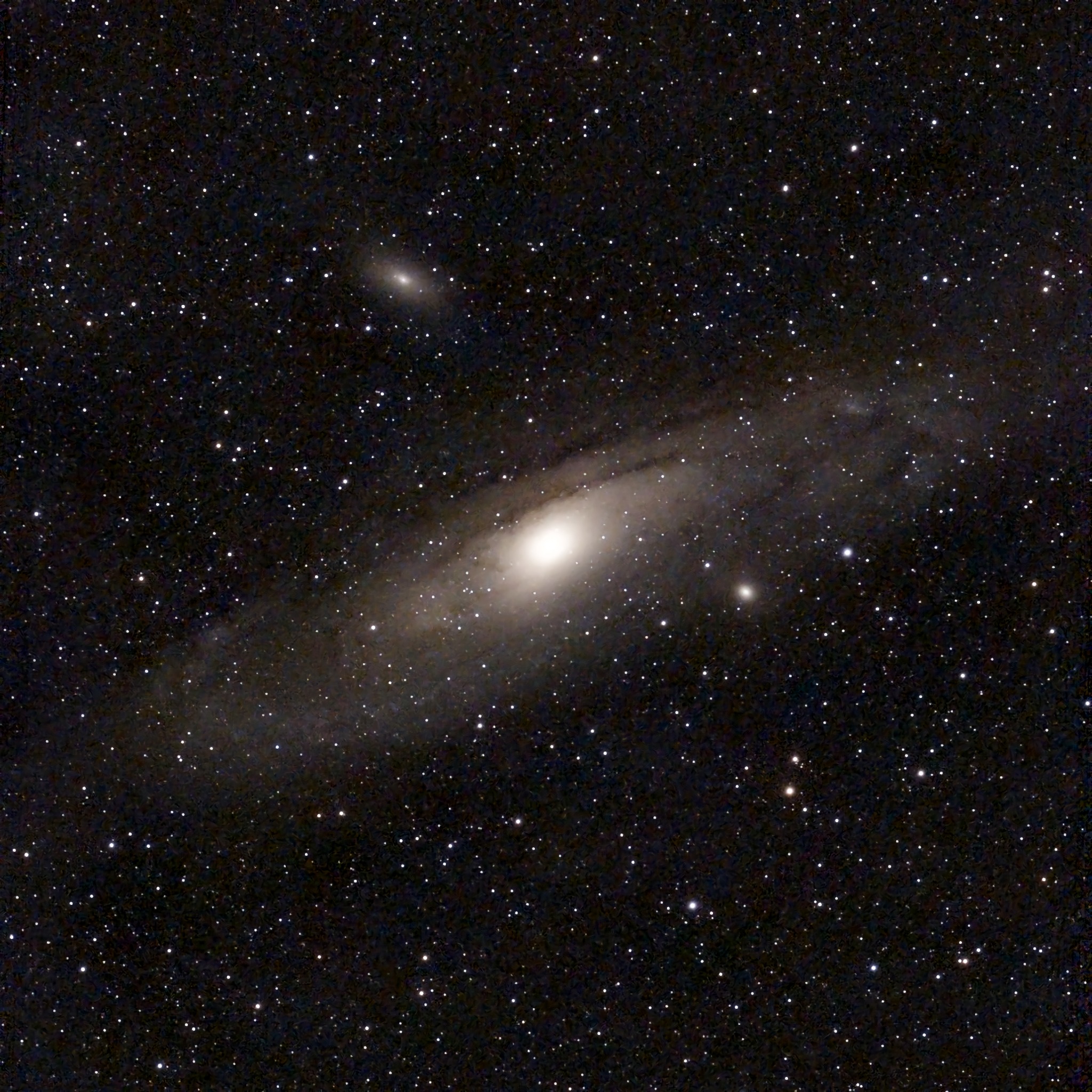
The Andromeda Galaxy, imaged in 2023 with the EVScope 2 (top), in 2025 with the Vespera 2 Pro (middle), and in 2026 with the Seestar S30 Pro (bottom).
Needless to say, the middle and bottom pictures stand out.
Admittedly, the Vespera’s image is less edited than the Seestar’s. I used Pixelmator Pro on both images, but only the Seestar app comes with that image processing capacity. And this time, I turned on an option in the app to save each individual 10-second exposure taken by the Seestar and combined to form the 22-minute final product. By recombining these exposures in the app, the image was sharper and brighter.
Still, I’d say the amount of processing time was about the same for each image. So, you tell me: which do you like better? The Seestar’s might be a bit brighter, and a little more zoomed out. Since the Andromeda Galaxy looks about six times wider than the full Moon in the night sky, a wide shot provides a big advantage.
At first, I couldn’t decide which image I like more. Eventually, I leaned towards the Vespera image; it just seemed a bit more detailed around the galactic core, and a bit less noisy when viewed up close.
But there’s always that tendency to prefer the product that you know costs more, or that is supposed to be better. I learned this to my chagrin while collecting mechanical watches. Then, one day, I bought a used Seiko Speedtimer – the “Pogue,” a descendant of a watch worn by an astronaut aboard Skylab. When it arrived, it cost ten times less than the watch I was wearing. But it looked better, kept more accurate time, and earned me a compliment that night.
The lesson: don’t let yourself be deceived by cost and branding.
With that in mind, I asked my wife and children what they thought about the two Andromeda images. And to my surprise, all three chose the Seestar version. Maybe you agree, and maybe you don’t. But I’m increasingly unsure that it makes sense to spend more on a smart telescope than the $700 I shelled out for the Seestar.
That’s especially true when you consider just what a joy the little scope is to use. It might just be the first telescope I’ve ever owned that’s actually smaller than expected. It genuinely fits in the palm of my hand, and it’s easy to grip. So far, it’s even easy to fix on the rare occasions it fails to track something right away (I just calibrate the compass, spin the telescope a few times, and I’m back in business).
Anyway, after taking a shot of Andromeda, I tried my hand at a series of nebulae near the dense star fields around the galactic core – nebulae I’ve never imaged before.
NGC 7000, the North America Nebula, was first in line. The Nebula, first detected by William Herschel some 240 years ago, covers an area some ten times bigger than the full Moon. It may be the largest celestial object – of course, from our point of view on Earth – that I’ve photographed with any telescope. Like Andromeda, it made good use of the Seestar’s short focal length.
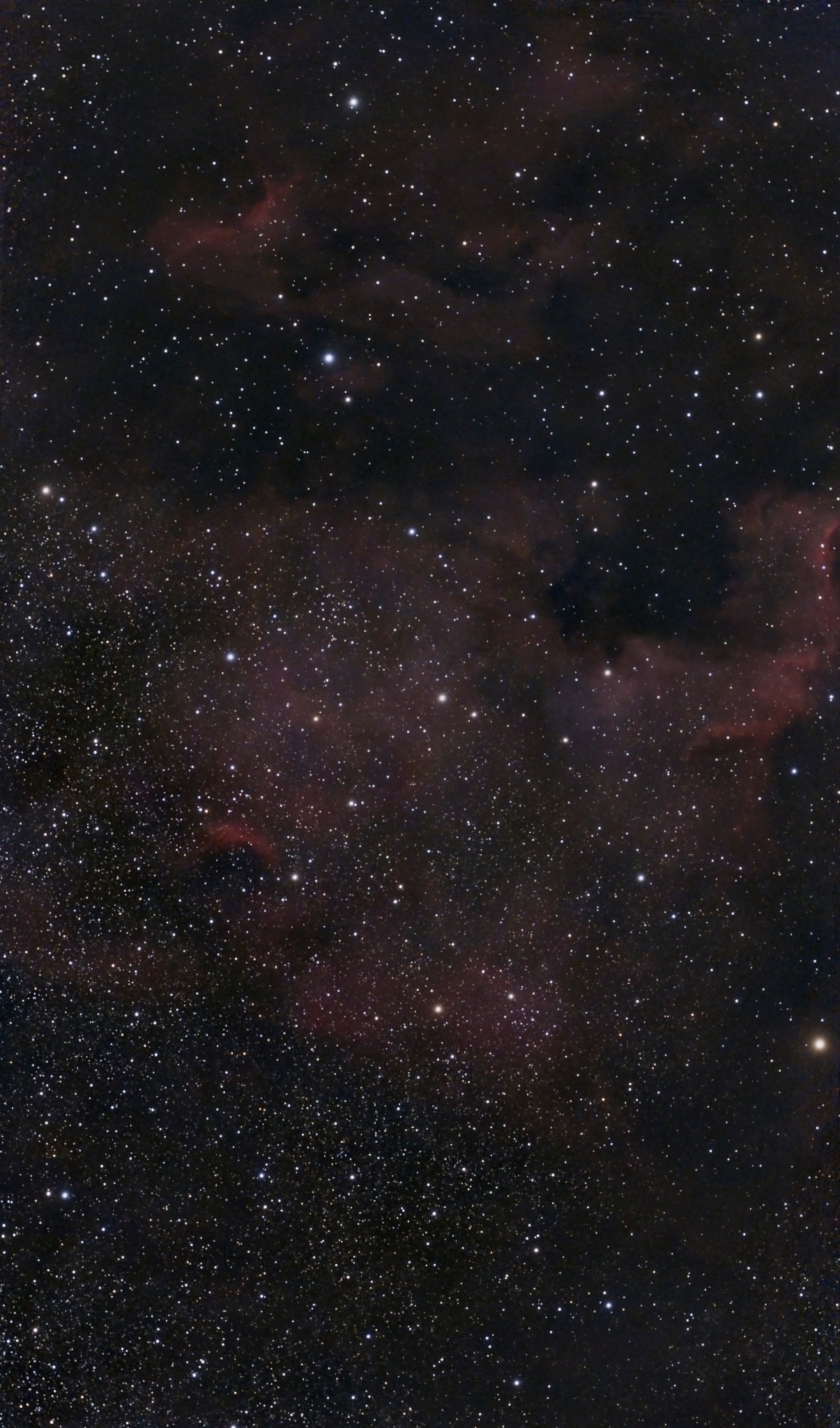
The North America Nebula spans some 46 light years, "north" to "south." Can you see Hudson Bay?
Next up was NGC 6888, the crescent nebula. This nebula appears – and is – much smaller than the North America Nebula, but no less interesting.
Its origins date back “just” 250,000 years ago – about 50 millennia after the evolution of our species – when a massive star ballooned into a red supergiant and, in the process, unleashed a slow, dense stellar wind that began to plough through its cosmic neighborhood. The wind stripped away the star’s outer layer of hydrogen, exposing its incandescent inner layers.
A new, much faster but more diffuse stellar wind surged out from those deep layers, quickly overtaking the gas carried away by the older winds. The result: a luminous shell of gas wedged between two shockwaves, one streaking out from the collision, the other barreling back towards the star.
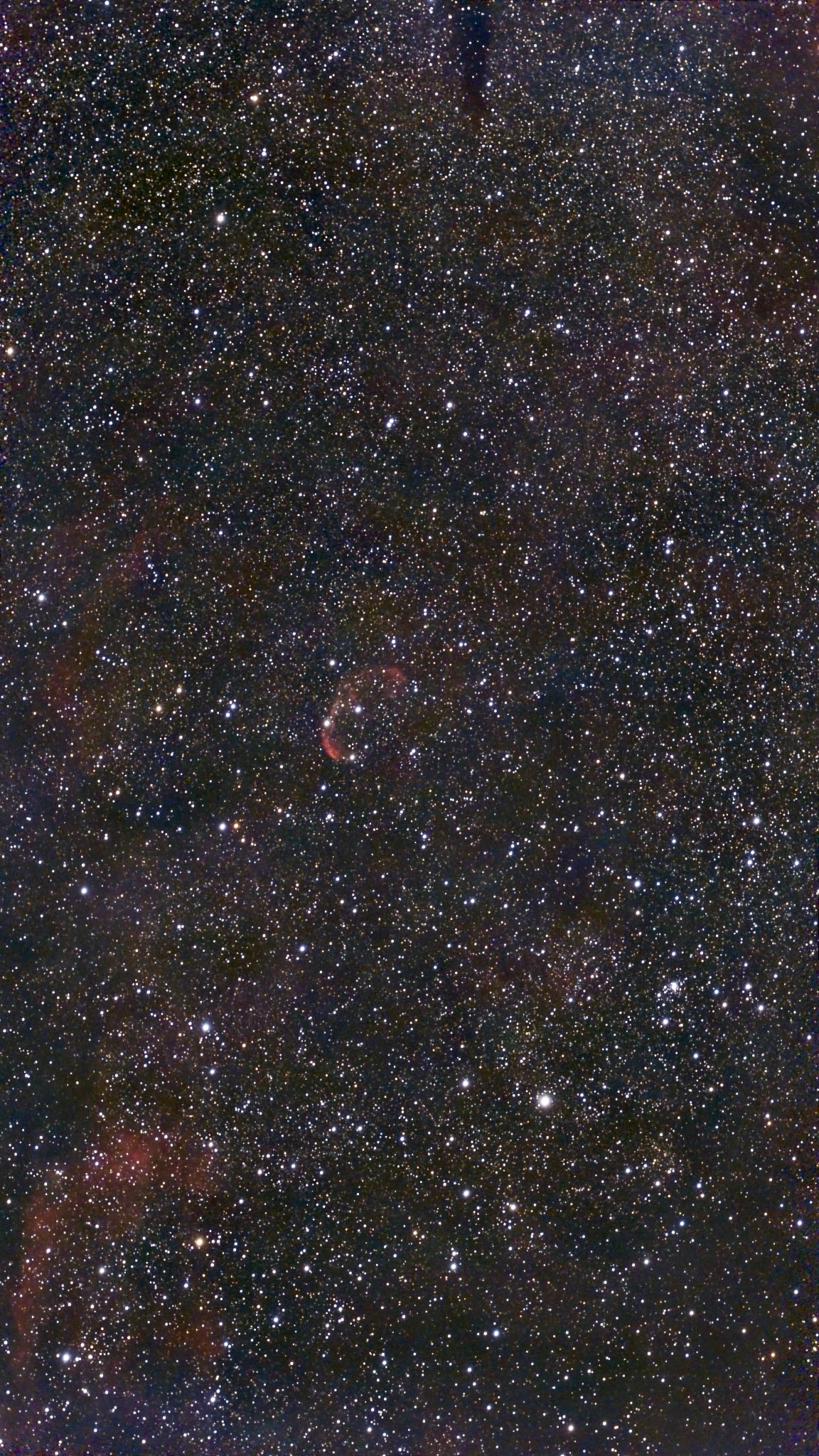
The Crescent Nebula (in the middle, just left of center) and Barnard 145, a dark nebula (at the top, just right of center).
That’s what we see in the center of this picture. And oh, those stars! I’ve never captured a starfield quite like this one. Note the dark nebula (Barnard 145) towards the top center of the image. Most of the stars are behind it, but a few are in front; it gives a sense of three-dimensionality to the image.
Now I turned to IC 5146, the Cocoon Nebula, a stellar nursery that looks like a cosmic rose, its petals delineated by the tendrils of another dark nebula, Barnard 168. The star that illuminates the Cocoon Nebula was born just 100,000 years ago, which makes it only a little older than the surge of human migration out of Africa that globalized our species.
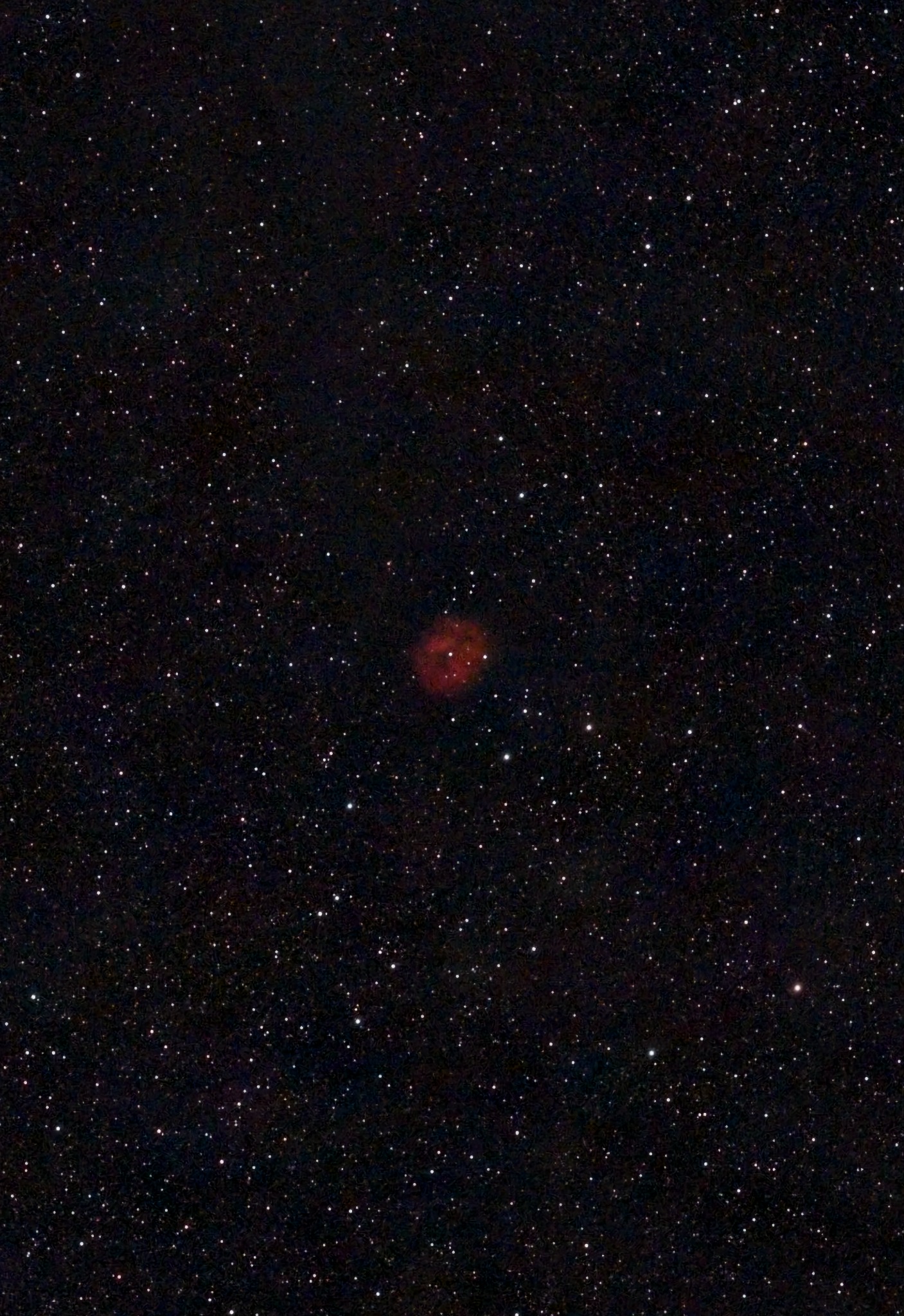
The Cocoon Nebula, a rose glowing in a starfield.
It was nearing 1:00 AM by now, and I had trouble keeping my eyes open. Still, I had to image just a couple more objects I hadn’t seen before. One of them was NGC 6946, the Fireworks Galaxy, a spiral some 25 million light years away that isn’t much smaller than our Milky Way.
The Fireworks Galaxy was once believed to be part of our Local Group of galaxies, but now it’s known to be one of a dozen bright spirals that lie just beyond our galactic cluster. Its extraordinary rate of star formation makes it what’s called an active “starburst” galaxy, and as a result it’s a hotbed of stellar death, too, at least for the big stars. More supernovae have been seen in the Fireworks Galaxy than in any other galaxy.
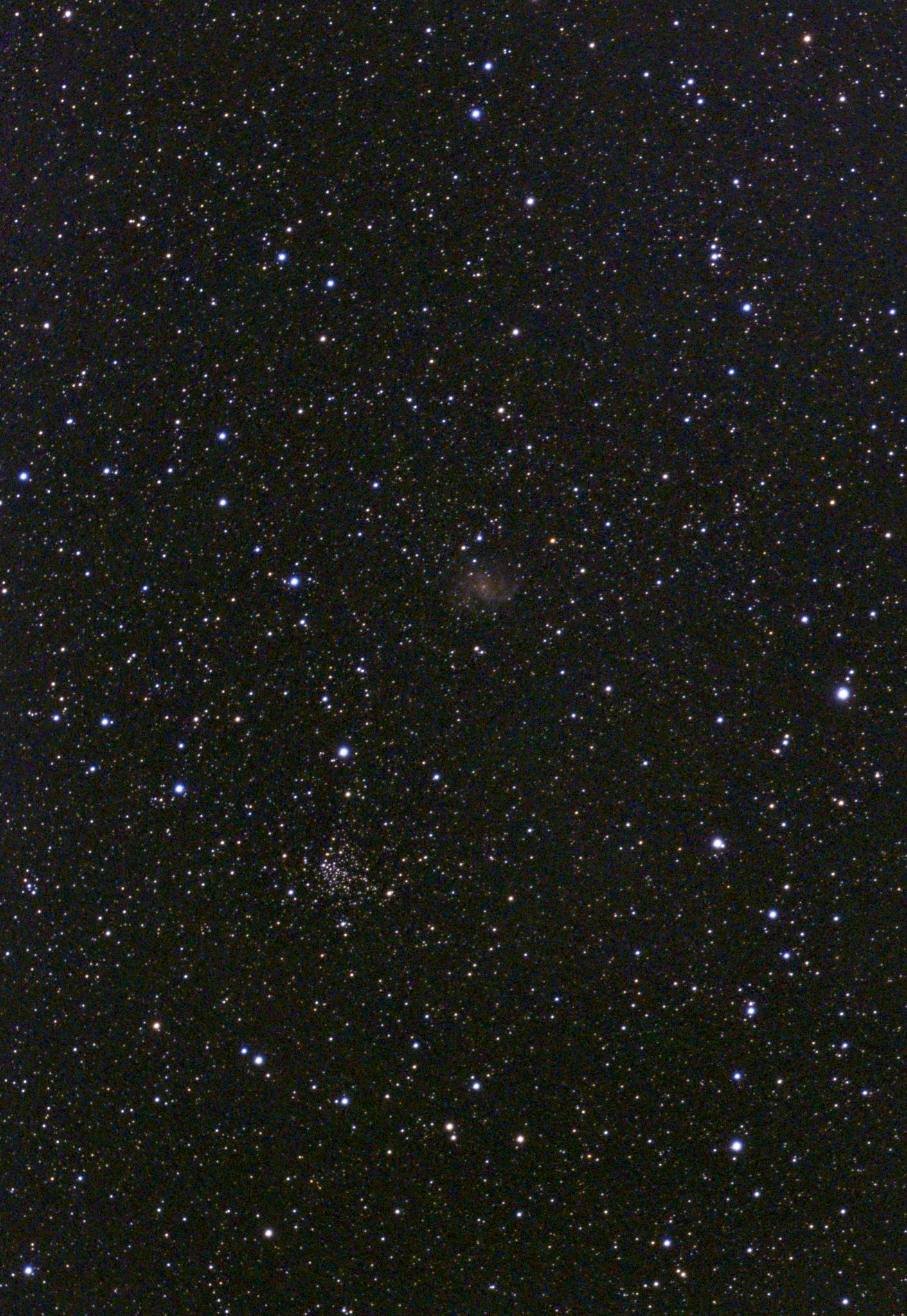
A short (12-minute) exposure shows the Fireworks Galaxy (center), barely visible in a dense starfield. I was too tired for a longer exposure!
That was it for me. The rains came as expected on the following day – with a ferocious storm that brought a tornado, not too far from us. We avoided the worst of the storm, and could watch as two towering thunderheads sailed by on either side of our cottage.
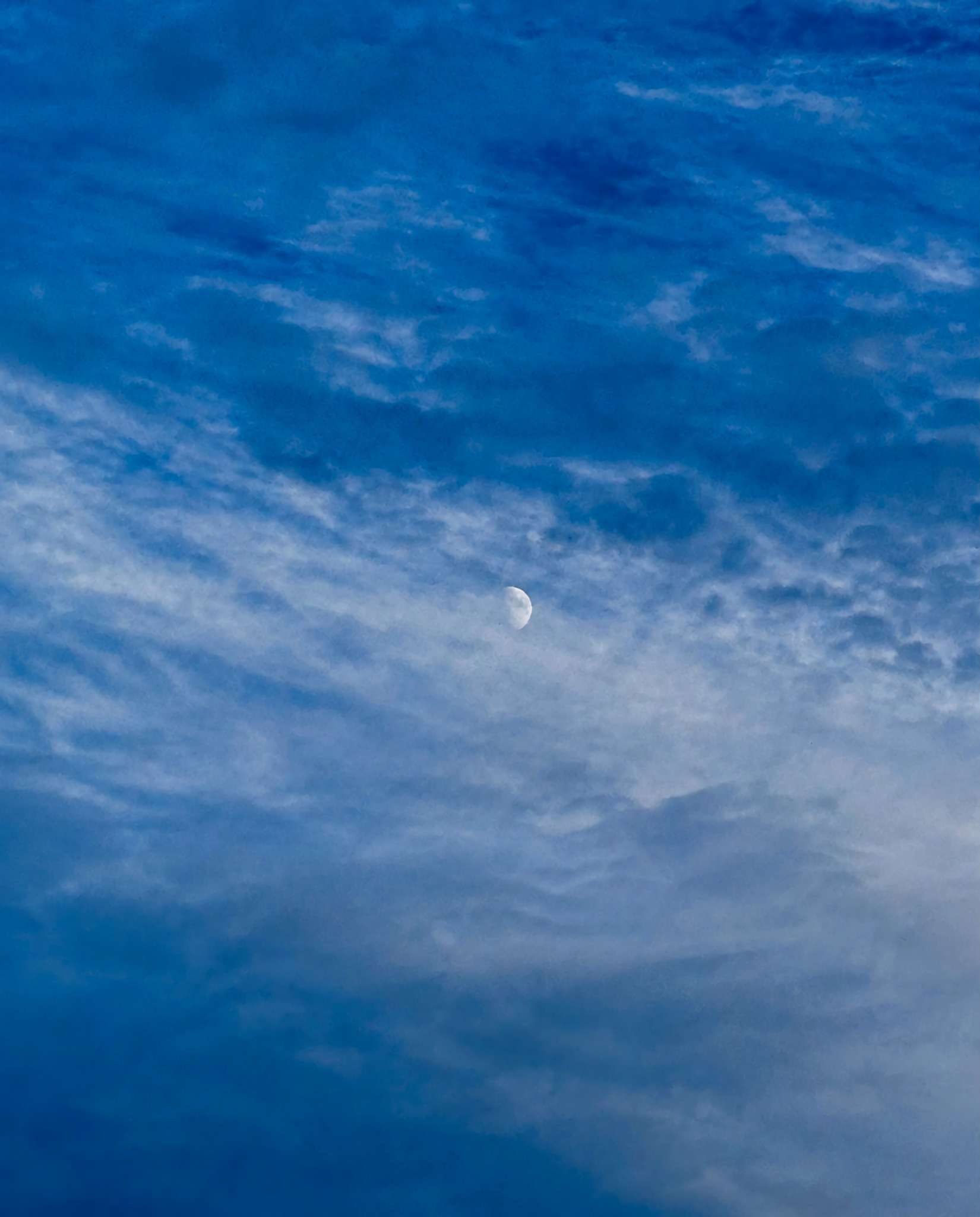
Moon and clouds on the seashore.
On the following evening, a breathtaking skyscape – clouds of many kinds, in many layers – framed the waxing Moon. I sat on a third-story balcony, drinking a beer as the Sun started to set, watching the Moon as it winked behind the scudding clouds. I couldn’t help but reflect, once again, that perhaps the finest astronomical instrument of all is the naked eye.