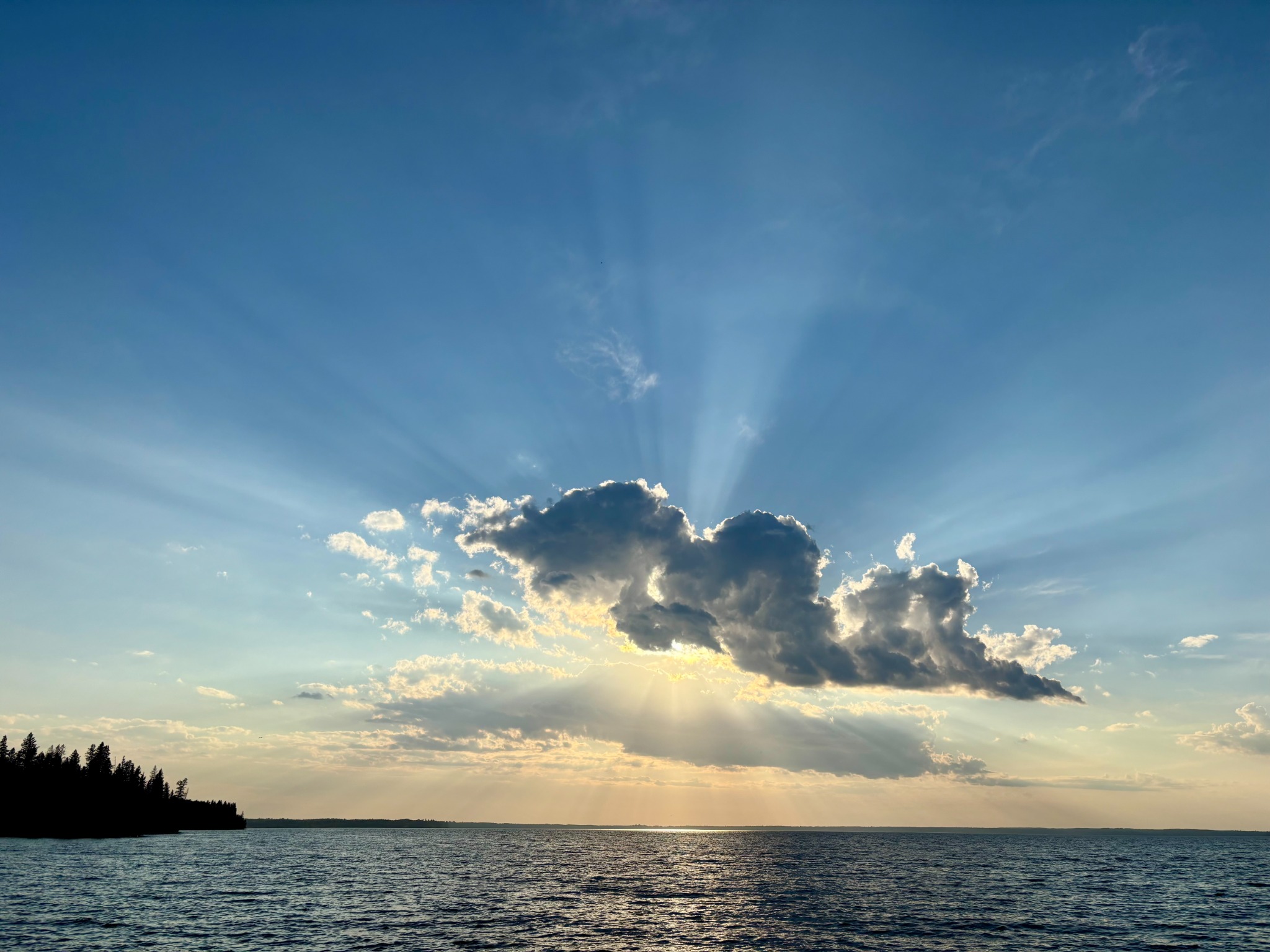
The Sun begins to set over Clear Lake, in Riding Mountain National Park.
A sad reality of our time is that, across North America, summers are now accompanied by wildfire smoke.
This July, the bulk of it came from northern Ontario. Most wafted east and south, so we missed it here in Winnipeg – except when the prevailing winds shifted to blow southwest. And over the course of the month, new fires sparked to life across northwestern Manitoba. On most days, they sent their smoke south towards Winnipeg.
Long-time readers will know that I study climate change for a living. And there’s nothing that depresses me quite like the sickly orange haze that now settles over our cities for part of the year. It’s not just that it’s all that remains of incinerated plans, trees, and ecosystems. It’s not just that I know it’ll only get worse as my children grow up and the world continues to warm – or that it triggers my worsening asthma.
It’s that it takes away the night sky.
On most nights this month, it was just too smoky in Winnipeg to see more than the brightest stars. My dream of using the Takahashi and Seestar in tandem was obviously a lost cause.
I did have some hope when we left for our annual retreat to Riding Mountain National Park, near the Saskatchewan border, where the stars are about as dark as they get in southern Canada. And indeed, during the day, there were hints of blue sky. But vivid, fiery sunsets revealed that the atmosphere was far from transparent. So, I wasn’t surprised – only saddened – when at night the sky was nowhere near as dark as it usually is.
The Seestar, however, comes with a little solar filter. In my desperation, I decided to use it.
Why desperation? Well, in my new book – Ripples on the Cosmic Ocean, now a Scientific American book of the year (!) – I explain my strange aversion to solar observation.
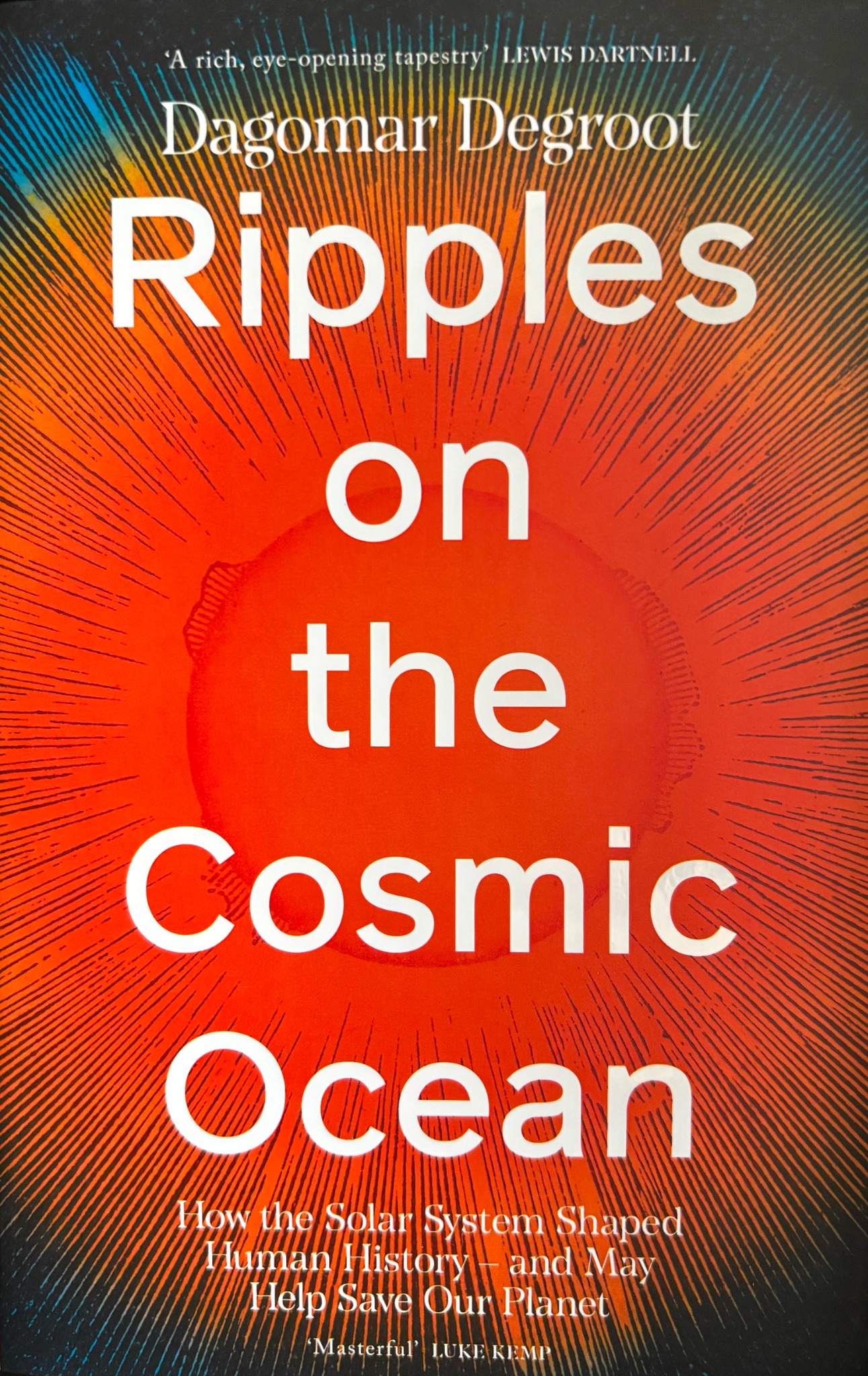
The Sun is so central to Ripples that it's the cover of the Penguin version of the book.
Using an h-alpha telescope, in the “baking midday heat,” I recalled, “something started to gnaw at me. I felt like I was watching the irregular beating of my own heart, on an unimaginably vast scale. It was one thing to know, but another thing entirely to experience, that the foundation of all human existence was on some level unstable, and unpredictable.”
It disturbed me – so much that I sold my h-alpha telescope and didn’t record the experience in this journal!
But I suspected things would be different this time around. The Seestar, after all, isn’t an h-alpha telescope. It uses a white light solar filter. Whereas an h-alpha telescope blocks all light except for that which escapes from a narrow layer of hydrogen just above the Sun’s incandescent surface, a white light filter simply blocks 99.999% of the Sun’s light, with no preference for what gets through.
This means that while an h-alpha telescope can reveal the extraordinary, shifting detail of the solar surface, a white light filter, attached to a regular telescope, shows nothing more than sunspots. That, I thought, I could handle.
Over the past two weeks, I developed a routine. Whenever I could clearly see the Sun in the afternoon, I’d step out – often with my little son – and turn on the Seestar. After a few seconds, when the little telescope skewed to the Sun, I took a picture, then slipped back inside.
Every excursion took fewer than five minutes. A good thing too, because although stars were in short supply in Riding Mountain, mosquitoes assuredly were not. One rainstorm after another has battered southern Manitoba since the spring, until rivers spilled their banks and floods swamped roads, even small towns. The fire risk in Riding Mountain itself was accordingly very low, but mosquito larvae multiplied in every standing pool of water. By the time we got there, their numbers had reached biblical proportions.
Yet, amid smoke and mosquitoes, the Seestar at least let me observe something in the heavens. And that something – the emergence and migration of sunspots across the solar surface – turned out to be fascinating.
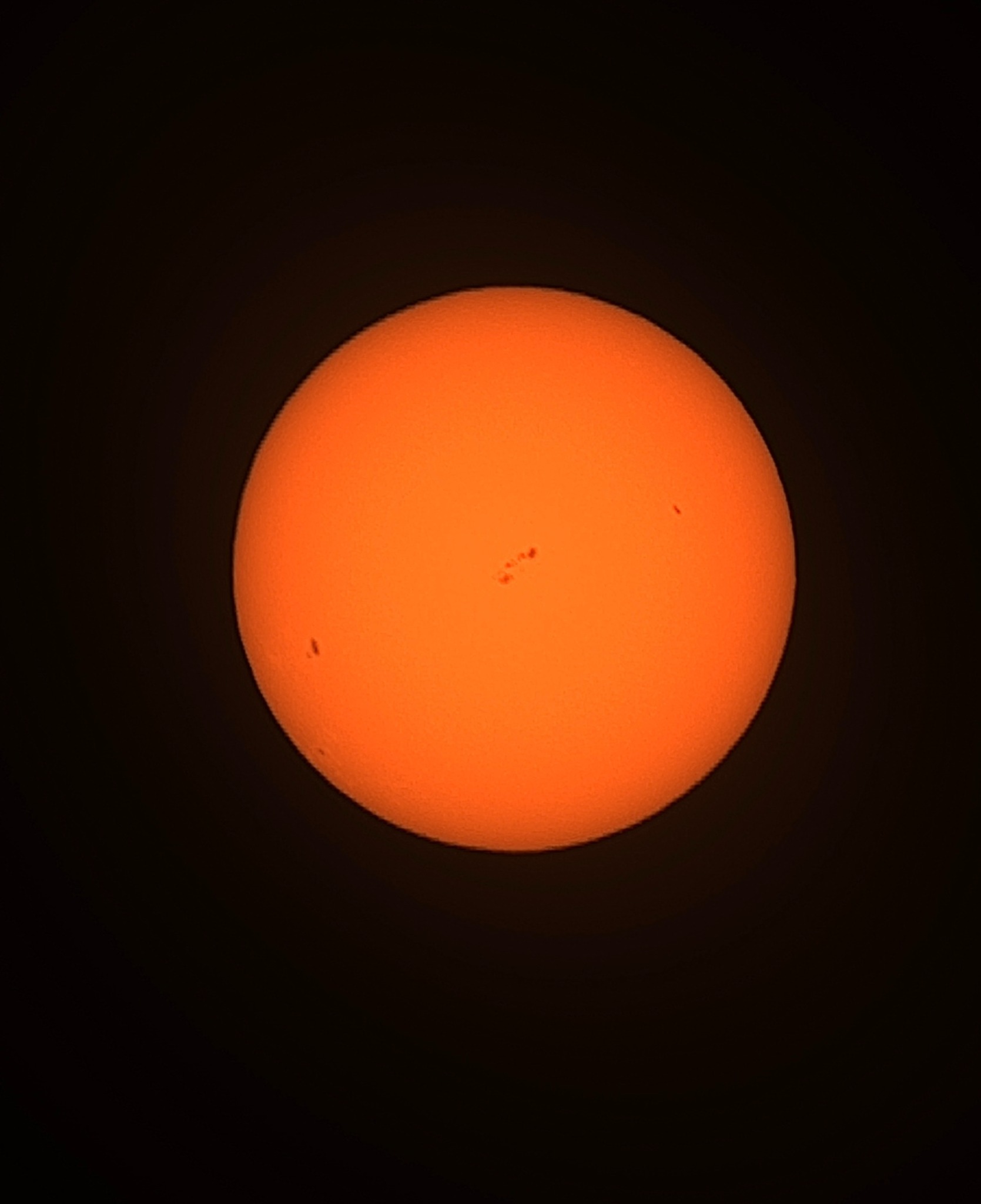
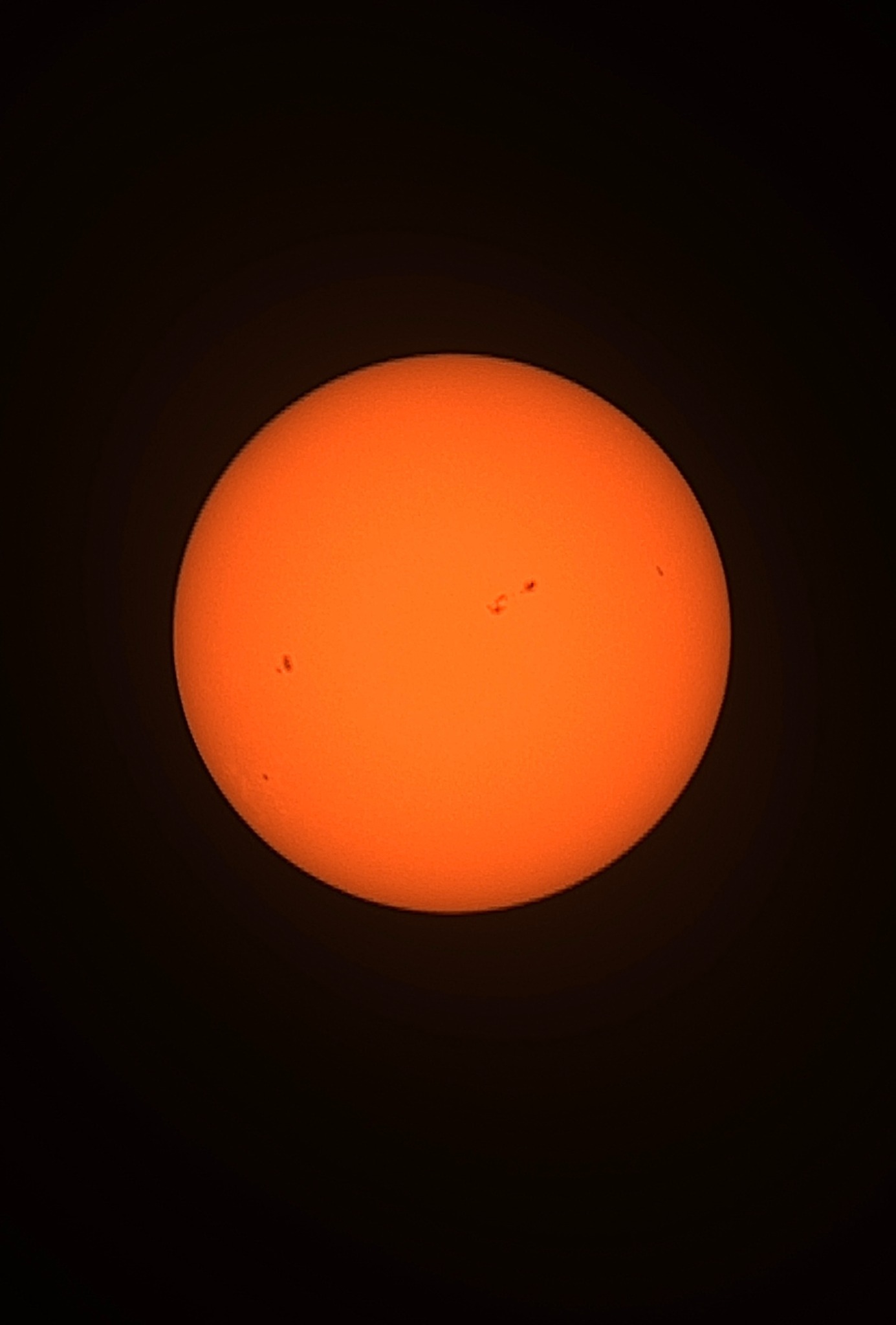
Because some of the sunspot groups were enormous. On the 21st and 22nd, I was amazed to see a cluster of sunspots that was, clearly, many times as long as the Earth is wide. The Sun is obviously very active right now, and that’s turning into a theme of my Manitoba trips. It was just two years ago when I watched in awe, from our backyard in Winnipeg, as the aurora borealis flickered overhead.
It was the first time I’d seen the aurora, and – again – I forgot to record it in these pages! But I had a good reason: I was hard at work, revising the chapters of my new book that deal with the Sun and its history. The last thing I wanted to do was write about solar storms in my spare time.
Still, the 2024 aurora had a profound impression on me, one I wish I’d recorded at the time. I remember stepping outside and wondering whether the northern lights had really materialized, as expected. At first, the glow in the night sky didn’t seem that different than Winnipeg’s ordinary light pollution.
But slowly, as those solar ions found their way into our atmosphere and the storm strengthened, and as my eyes grew adapted to the dark, I found that the night sky changed in ways I’d never experienced before. Green columns shimmered into view, stretching up into what seemed like infinity. How they flickered and wavered! I’d never seen the sky shift so quickly – a ghostly green here, but now there; a cathedral of light rising above that tree, yet now shining through the other.
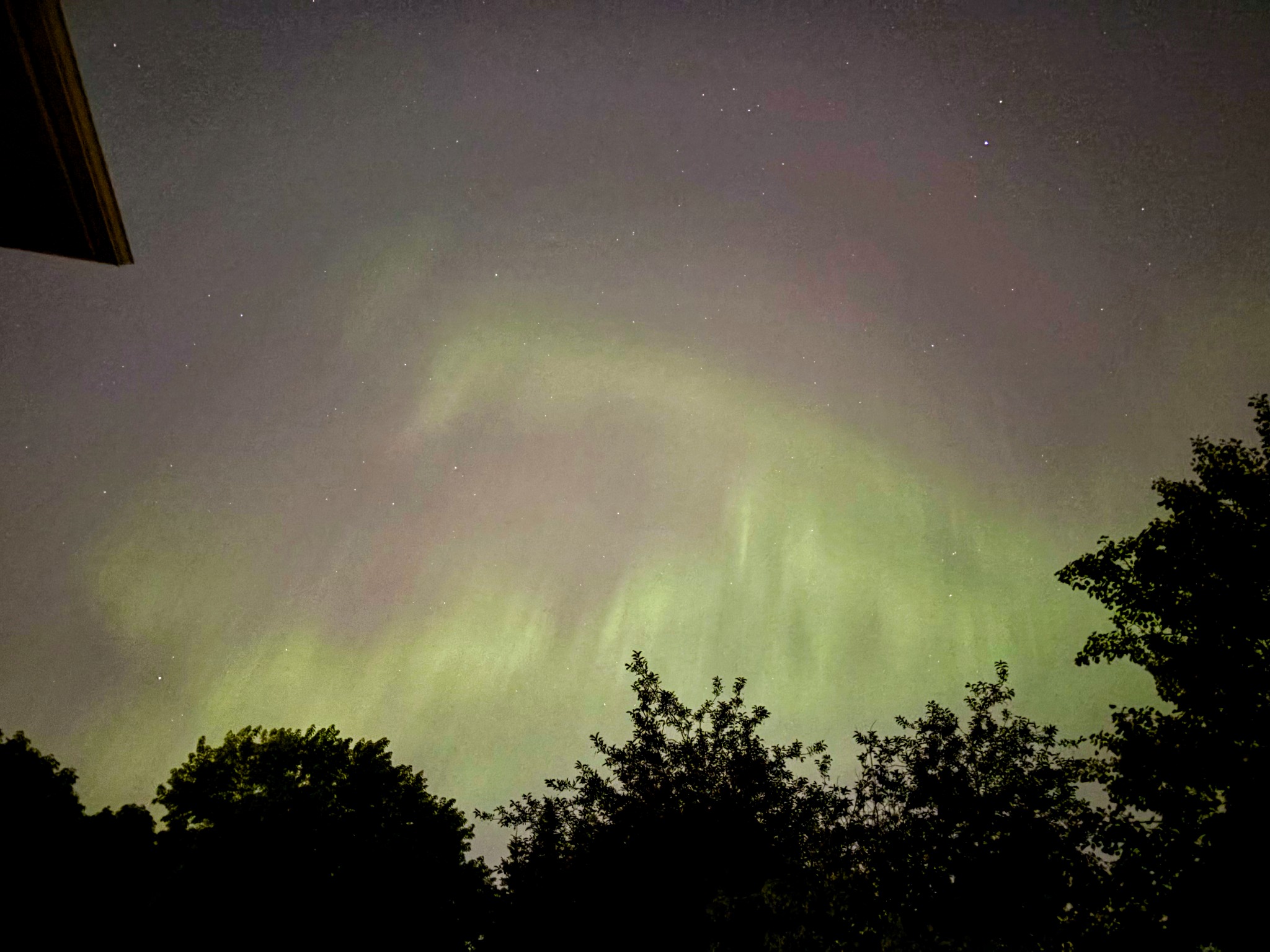
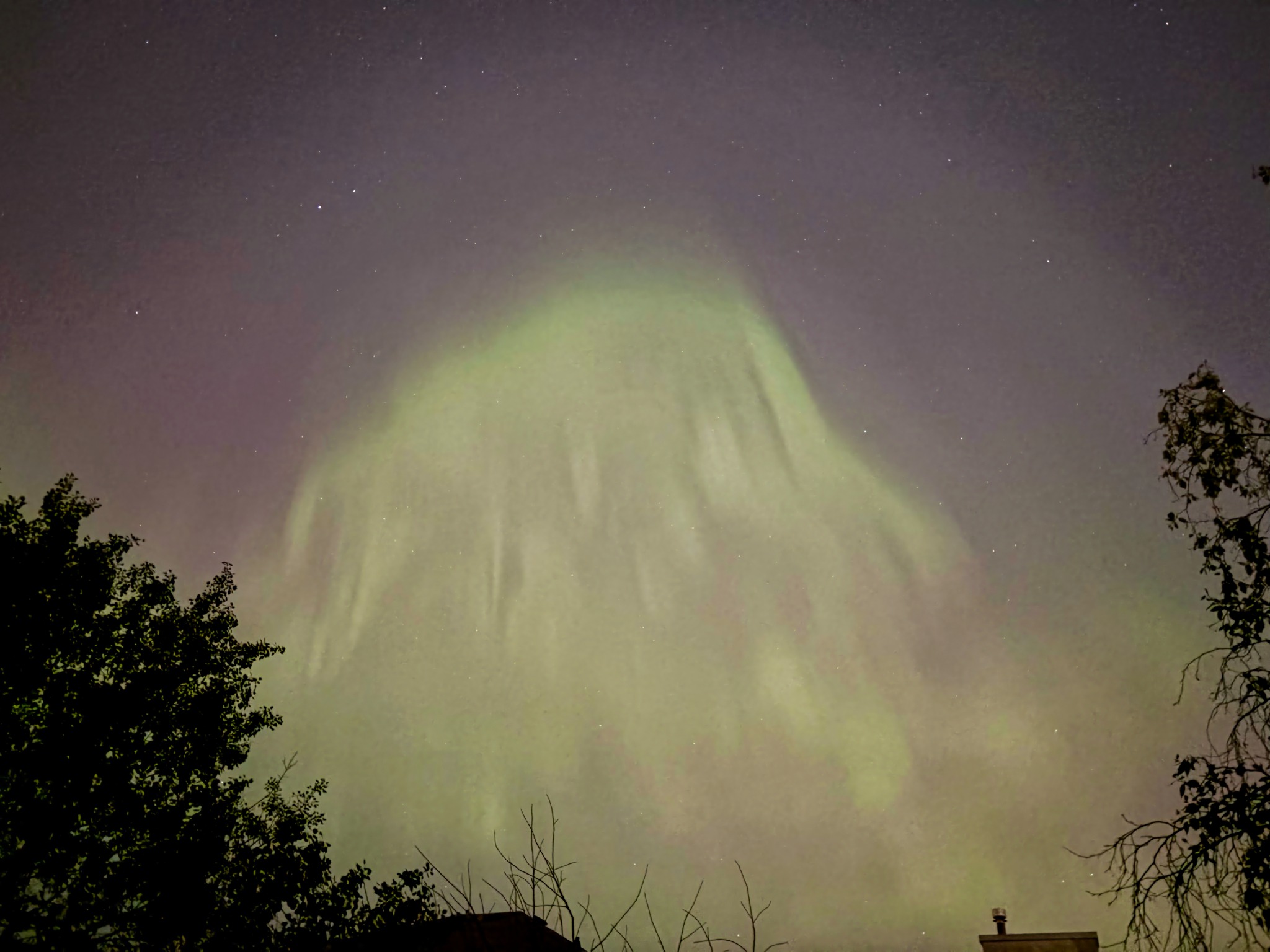
In hindsight, I suppose it was a little like seeing the surface of the Sun through that h-alpha telescope. It reminded me of just how profoundly, and how abruptly, our cosmic context could change. But rather than a sense of dread, it filled me with wonder. And I’m still not quite sure why.
This idea – that we’re part of a bigger, cosmic environment that changes, and that the changes in this environment can affect us – is of course central to Ripples on the Cosmic Ocean. So, there was something special about really feeling it, under the northern lights.
And I caught an echo of that feeling while tracking sunspots through wildfire smoke with the little Seestar this month.
The telescope’s complementary solar filer struck me as an afterthought when I learned about it. It doesn’t seem that way now.